
Multi-Asset Liquidity Provider: The Complete Guide to Cross-Asset Liquidity Solutions
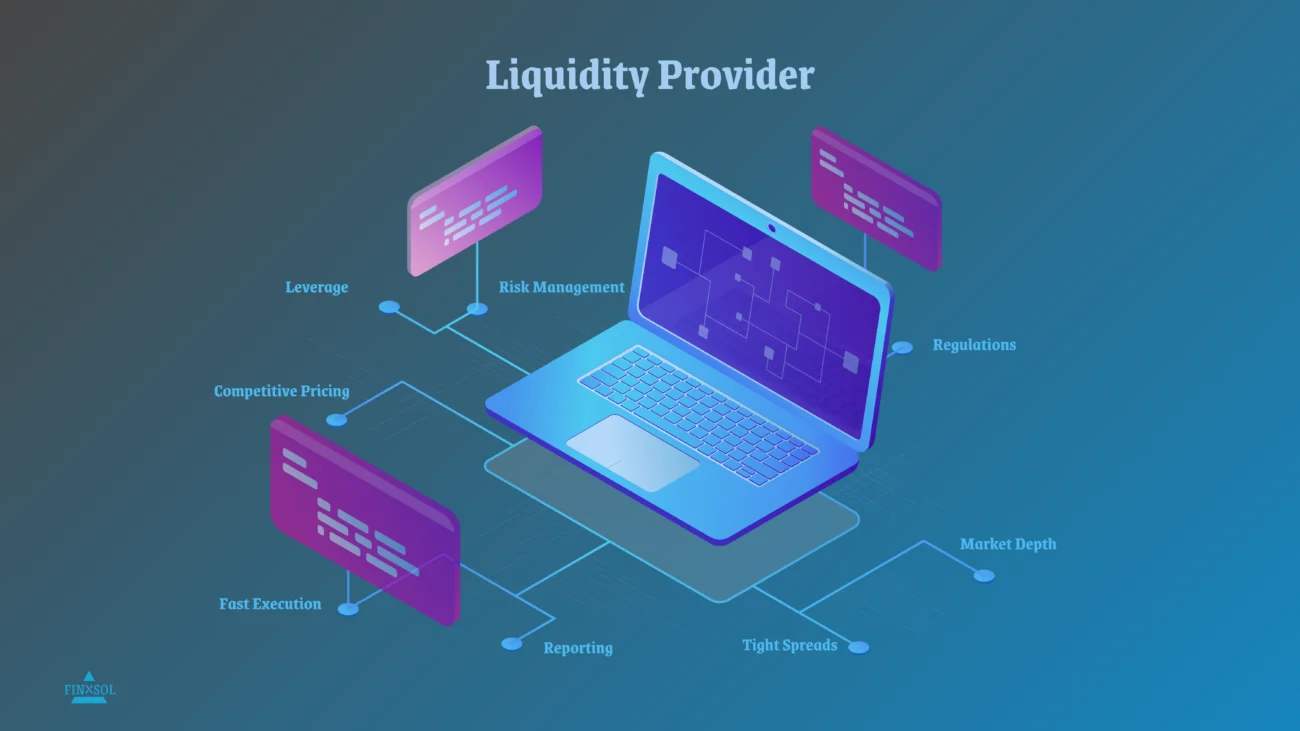

What is a Multi-Asset Liquidity Provider?
A multi-asset liquidity provider (LP) is a financial institution – such as a bank, hedge fund, or specialized firm – that supplies continuous buy and sell orders across multiple asset classes, including forex, indices, commodities, cryptocurrencies, and equities. Unlike single-asset LPs that focus on one market, multi-asset LPs aggregate liquidity from various sources, enabling brokers and traders to access deep, competitive pricing across all asset classes from a single connection.
In today’s interconnected financial markets, multi-asset liquidity providers have become essential for maintaining tight spreads, reducing slippage, and ensuring fast trade execution across asset classes. Without them, multi-asset brokerages would struggle to offer competitive conditions or would need to maintain multiple expensive LP relationships.
How Multi-Asset Liquidity Works
Multi-asset liquidity providers connect to multiple liquidity sources – including Tier 1 banks, ECNs, crypto exchanges, and other institutional players – and aggregate this liquidity into a unified feed. Through advanced technology such as FIX API, liquidity bridges, and smart order routing, LPs distribute this aggregated liquidity to brokers, who then offer it to their clients via trading platforms like MT4/MT5, cTrader, or proprietary web/mobile applications.
Modern multi-asset LPs use sophisticated algorithms to optimize price aggregation, minimize latency, and manage risk across asset classes. They provide brokers with a single API connection to access forex, crypto, commodities, indices, and equities, significantly reducing operational complexity.
Tier 1 vs Tier 2 Liquidity Providers
Liquidity providers can be classified based on their institutional backing and market function:
Tier 1 Multi-Asset Liquidity Providers
Tier 1 LPs are large financial institutions and banks that offer direct access to deep liquidity pools. Examples include Goldman Sachs, JPMorgan, and Citigroup. These entities operate at the highest level of market-making, ensuring deep liquidity for institutional investors and brokers. Tier 1 LPs typically offer the tightest spreads but may require high minimum monthly volumes, making them suitable primarily for large brokerages and institutional clients.
Tier 2 Multi-Asset Liquidity Providers
Tier 2 LPs act as intermediaries between Tier 1 banks and smaller brokers. They include prime of prime (PoP) providers, smaller banks, hedge funds, and specialized liquidity firms. Tier 2 providers aggregate liquidity from multiple Tier 1 sources and offer it to retail brokers with lower volume requirements and more flexible terms. Many multi-asset brokers choose Tier 2 LPs for the balance between competitive pricing and accessibility.
Key Benefits of a Multi-Asset Liquidity Provider for Brokers and Traders
Unified Market Access
Access forex, indices, commodities, crypto, and equities through a single connection, reducing operational overhead and simplifying middle-office processes.
Improved Trade Execution
Benefit from aggregated liquidity across asset classes, resulting in tighter spreads, reduced slippage, and faster execution for all instruments.
Regulatory Compliance
Top-tier multi-asset LPs operate under supervision of regulatory bodies like the FCA, CySEC, and ASIC, ensuring a fair and transparent trading environment.
Portfolio Diversification
Enable your clients to diversify across multiple asset classes on a single platform, increasing trader retention and lifetime value.
Enhanced Risk Management
Cross-asset correlation insights help brokers manage exposure more effectively across correlated instruments and market conditions.
Competitive Pricing
Multi-asset LPs aggregate prices from multiple sources, ensuring competitive spreads and reduced transaction costs for end clients.
Multi-Asset Liquidity Provider vs Market Maker: Key Differences

While both liquidity providers and market makers play crucial roles, they operate differently and serve distinct purposes. Understanding these differences is essential when building your brokerage’s liquidity infrastructure.
| Feature | Multi-Asset Liquidity Provider | Market Maker |
|---|---|---|
| Primary Role | Supplies liquidity by offering continuous buy/sell orders across multiple asset classes | Acts as counterparty to client trades, creating markets for specific assets |
| Execution Model | Uses ECNs, matching engines, or FIX API to connect buyers and sellers directly | Sets own bid/ask prices and internalizes trades (B-Book model) |
| Pricing | Aggregates quotes from multiple sources for competitive pricing | May have wider spreads to cover risk |
| Risk Profile | Absorbs large orders to prevent market disruptions | Profits from spread but faces potential losses from adverse market moves |
Many multi-asset brokers use a hybrid approach: routing most trades to LPs (A-Book) while internalizing some flow (B-Book) to maximize profitability while maintaining competitive conditions.
How to Choose the Best Multi-Asset Liquidity Provider

Selecting the right multi-asset liquidity provider is critical for brokers and institutional traders. Here are the key factors to consider:
- Regulatory Compliance: Ensure the LP is regulated by reputable authorities such as the FCA, CySEC, ASIC, or SEC. This ensures transparency and adherence to industry standards.
- Depth of Liquidity Across Asset Classes: Evaluate the provider’s liquidity depth across forex, crypto, indices, commodities, and equities. Deeper pools mean better execution for your clients.
- Competitive Pricing and Spreads: Compare spreads, commissions, and transaction costs across multiple LPs. The best providers offer tight spreads and low fees across all asset classes.
- Technology and Infrastructure: Look for advanced technology including FIX API connectivity, smart order routing (SOR), low-latency infrastructure, and seamless integration with your trading platform (MT4/MT5, cTrader, etc.).
- Range of Instruments: Ensure the LP covers all the asset classes and specific instruments your clients need, including major forex pairs, crypto cross pairs, commodities, indices, and equities.
- Risk Management Tools: Robust risk management features such as real‑time monitoring, automated risk controls, and dynamic hedging capabilities are essential for protecting your capital.
- Reputation and Track Record: Research the LP’s industry reputation, read client testimonials, and review case studies to gauge reliability and performance.
- Customer Support: 24/7 technical assistance and dedicated account managers are crucial for resolving issues quickly and maintaining seamless trading operations.
Top Multi-Asset Liquidity Providers in 2026
Based on market reputation, regulatory standing, and technology capabilities, the following are among the leading multi-asset liquidity providers:
- Tier 1 Banks: Goldman Sachs, JPMorgan, Bank of America, Citigroup – offer institutional-grade liquidity with the deepest pools but typically require high minimum volumes.
- Non-Bank LPs: XTX Markets, Citadel Securities, Virtu Financial – leading non-bank providers with competitive pricing and advanced technology.
- Prime of Prime (PoP) Providers: ISAM Securities – aggregate liquidity from Tier 1 banks and offer accessible terms to retail brokers.
- Specialized Crypto LPs: Binance Liquidity, Wintermute, Jump Trading – leading providers for digital asset liquidity across spot and derivatives.
Note: The optimal provider depends on your specific business model, trading volumes, target markets, and technology stack.
Frequently Asked Questions (FAQ)
What is a multi-asset liquidity provider?
Why is multi-asset liquidity important for brokers?
What should you look for in a multi-asset liquidity provider?
What is the difference between Tier 1 and Tier 2 liquidity providers?
How does a multi-asset liquidity provider improve trading conditions for end clients?
How do liquidity providers connect to MT4/MT5?
Ready to Connect with the Right Multi-Asset Liquidity Provider?
Finxsol helps brokers, hedge funds, and financial institutions identify and connect with the best multi-asset liquidity providers for their specific business needs. Whether you need forex, crypto, or cross-asset liquidity, our experts provide tailored recommendations and seamless integration support.
Get a Free Consultation →