
Best White Label Trading Platform for Brokerages 2026
What is the best white label trading platform for your brokerage in 2026? After evaluating more than 20 providers against strict B2B criteria – liquidity depth, multi-asset support, branding flexibility, back-office tools, and total cost of ownership – we have identified the top five platforms. This guide gives you an in-depth comparison of MT5, cTrader, Match-Trader, DXtrade, and Fortex, including pros, cons, and a final verdict. For a complete turnkey setup, explore Finxsol’s white label solutions.
How We Selected the Best White Label Trading Platforms
We used a weighted scoring model to rank every platform. The criteria reflect what actually matters to a brokerage owner: liquidity and execution (30%), multi-asset support (25%), white-label branding (20%), back-office and CRM integration (15%), and cost transparency (10%). Only platforms scoring 8.5 or higher made it onto this list. We also considered real-world adoption, regulatory readiness, and client feedback from existing brokerages.

MetaTrader 5 remains the undisputed industry standard. It supports forex, stocks, futures, and CFDs – all from a single account. The platform’s ecosystem of third‑party tools, expert advisors, and signals is unmatched. New white label licenses are available through authorized partners like Finxsol, and the deployment process typically takes 4‑6 weeks. MT5 also offers a robust API for liquidity bridges, a mature manager interface, and advanced charting with 38 technical indicators and 44 analytical objects.
Key Strengths
- Largest user base – traders already know the platform
- True multi-asset (forex, stocks, futures, CFDs)
- Extensive ecosystem of third‑party tools and developers
- Powerful API for custom bridges and automation
- Mature back-office with PAMM/MAM and social trading
Limitations
- Higher setup cost ($15,000 – $25,000)
- Interface feels dated compared to modern rivals
- No native crypto payment gateways
- New white label licenses require an authorized partner
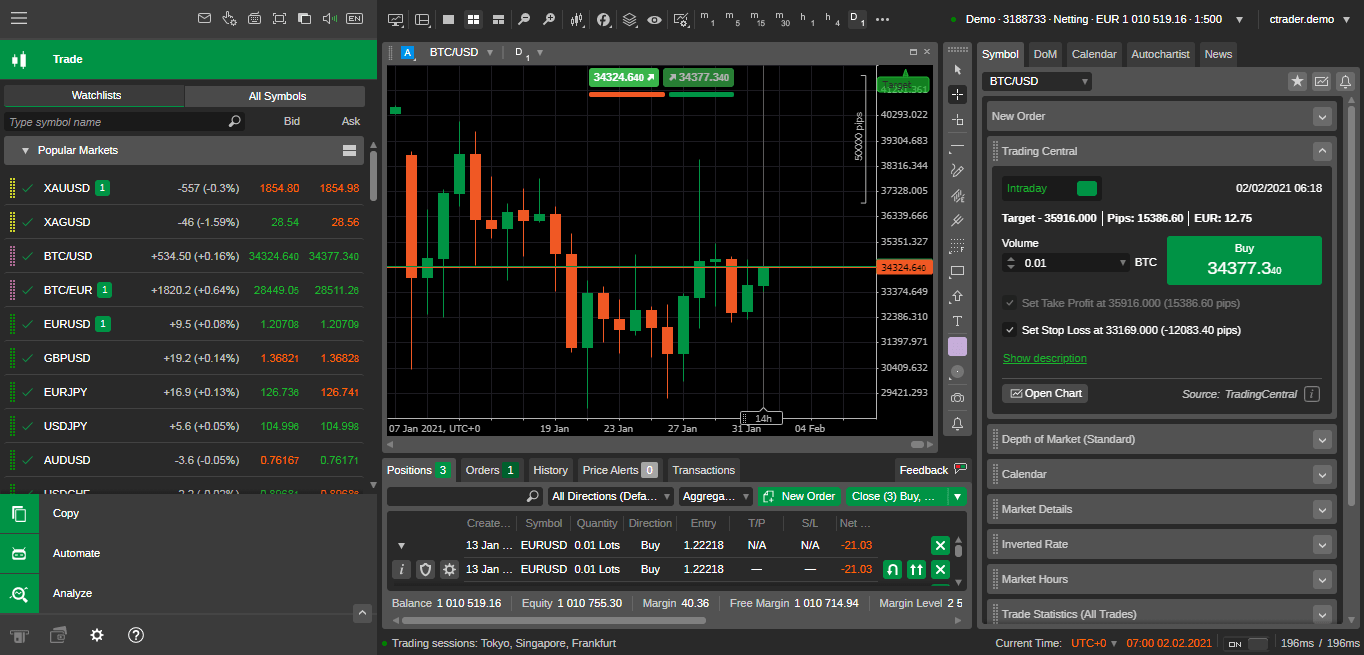
cTrader is the premium choice for brokers targeting serious, professional traders. Its clean, modern interface and transparent STP/DMA execution build instant trust. The platform offers Level II pricing, depth of market, and cAlgo for algorithmic trading in C#. Spotware provides a complete white label solution including full branding, back-office, and dedicated support. cTrader is particularly strong for forex and CFD brokerages that want to differentiate from the MetaTrader crowd.
Key Strengths
- Professional-grade interface and user experience
- Transparent STP/DMA with no dealing desk
- cAlgo for automated strategies
- Excellent mobile apps and web platform
- Strong brand reputation among experienced traders
Limitations
- Smaller ecosystem than MetaTrader
- Less brand recognition among retail beginners
- Limited stock and futures support (mainly forex and CFDs)

Match-Trader has rapidly become a favorite among new brokerages and crypto‑focused firms. It is a mobile‑first platform built on progressive web app technology – no app store approvals needed. The white label includes social trading, copy trading, built‑in crypto payment gateways, and a customizable back‑office. Match‑Trade Technologies offers zero setup fee options, making it one of the most accessible B2B platforms in 2026.
Key Strengths
- Zero setup fee options available
- Mobile‑first with PWA – no app store delays
- Built‑in crypto payment gateways
- Social and copy trading included
- Fast deployment (2‑4 weeks)
Limitations
- Newer platform with smaller ecosystem
- Less institutional recognition
- Limited historical data for backtesting
DXtrade stands out for its open integration framework. Unlike most white label platforms, DXtrade does not lock you into a specific liquidity provider or ecosystem. You can connect any LP, customize the front‑end extensively, and maintain full control over your technology stack. Built by Devexperts (a tier‑1 fintech developer), DXtrade is used by banks and large brokerages that need flexibility. It supports forex, CFDs, and digital assets with a modern web and mobile interface.
Key Strengths
- No vendor lock‑in – use any liquidity provider
- Open API and highly customizable UI
- Supports forex, CFDs, and digital assets
- Used by tier‑1 banks and brokers
- Transparent pricing model
Limitations
- Customization requires technical resources
- Setup can be longer (6‑8 weeks) for complex builds
- Less out‑of‑the‑box ecosystem than MT5
Fortex is an institutional‑grade platform trusted by over 500 banks, hedge funds, and prime brokerages. It provides direct liquidity provider connectivity, advanced risk management, and a full suite of KYC/CRM tools. Fortex’s white label solution is designed for high‑volume brokers that need deep integration and reliability. It supports multi‑asset trading including forex, equities, and crypto. If you are targeting institutional clients or planning to handle large order flows, Fortex is a top contender.
Key Strengths
- Direct LP connectivity – true institutional depth
- Advanced risk management and compliance modules
- Trusted by 500+ institutions globally
- Multi‑asset including crypto
- Full white‑label branding
Limitations
- Higher setup and monthly costs (enterprise pricing)
- Not designed for small retail brokerages
- User interface is functional but less flashy
Which Platform Is Right for Your Brokerage?
Quick Comparison of the Best White Label Platforms
| Platform | Multi-Asset Support | White Label Type | Starting Setup Cost | Best For |
|---|---|---|---|---|
| MT5 | Forex, stocks, futures, CFDs | Full white label | $15,000 – $25,000 | Mainstream multi-asset brokerages |
| cTrader | Forex, CFDs, metals | Full white label | $10,000 – $20,000 | Professional traders, STP/DMA |
| Match-Trader | Forex, crypto, CFDs | Full white label | $0 – $10,000 | Startups, crypto-friendly |
| DXtrade | Forex, CFDs, digital assets | Full white label | $12,000 – $25,000 | Flexibility, no vendor lock-in |
| Fortex | Multi-asset institutional | Full white label | $25,000+ | Prime brokerages, institutions |
Cost Considerations for Your White Label Brokerage
White label costs vary by platform and provider. Typical ranges include setup fees from $7,500 to $25,000, with monthly operating costs between $2,700 and $11,000. First-year costs generally range from $50,000 to $150,000 depending on your trading volume and feature requirements.
For a complete breakdown – including detailed platform pricing, licensing comparisons (white label vs main label), and hidden costs – see our dedicated white label cost guide.
Essential Infrastructure Beyond the Platform
Choosing the best white label trading platform is only the first step. A successful brokerage also needs:
- Reliable liquidity solutions and a liquidity bridge
- A forex CRM to manage clients, KYC, and reporting
- The correct regulatory license for your target markets
- Payment gateways and PSP integration
Finxsol provides all these components as part of our turnkey brokerage packages. We handle the integration so you can focus on growth.
Frequently Asked Questions About White Label Platforms
Conclusion: Choosing the Best White Label Trading Platform for Your Brokerage
There is no single “best” white label platform for every brokerage. Your choice should align with your target clients, asset focus, and budget. For most full‑service brokerages, MT5 remains the safest, most scalable option. cTrader leads for professional traders, Match‑Trader for startups and crypto, DXtrade for flexibility, and Fortex for institutional needs. Whichever you choose, ensure you have robust liquidity, CRM, and licensing in place.
Finxsol provides turnkey white label solutions for all five platforms, including full integration with liquidity, CRM, and payment gateways. We offer transparent pricing and a free consultation to help you decide.
Not sure which platform fits your business model?
Talk to Finxsol → Get a free recommendation and a customised quote.