
Introducing Broker vs Affiliate Program: Which Forex Partnership Model is Right for Your Business?
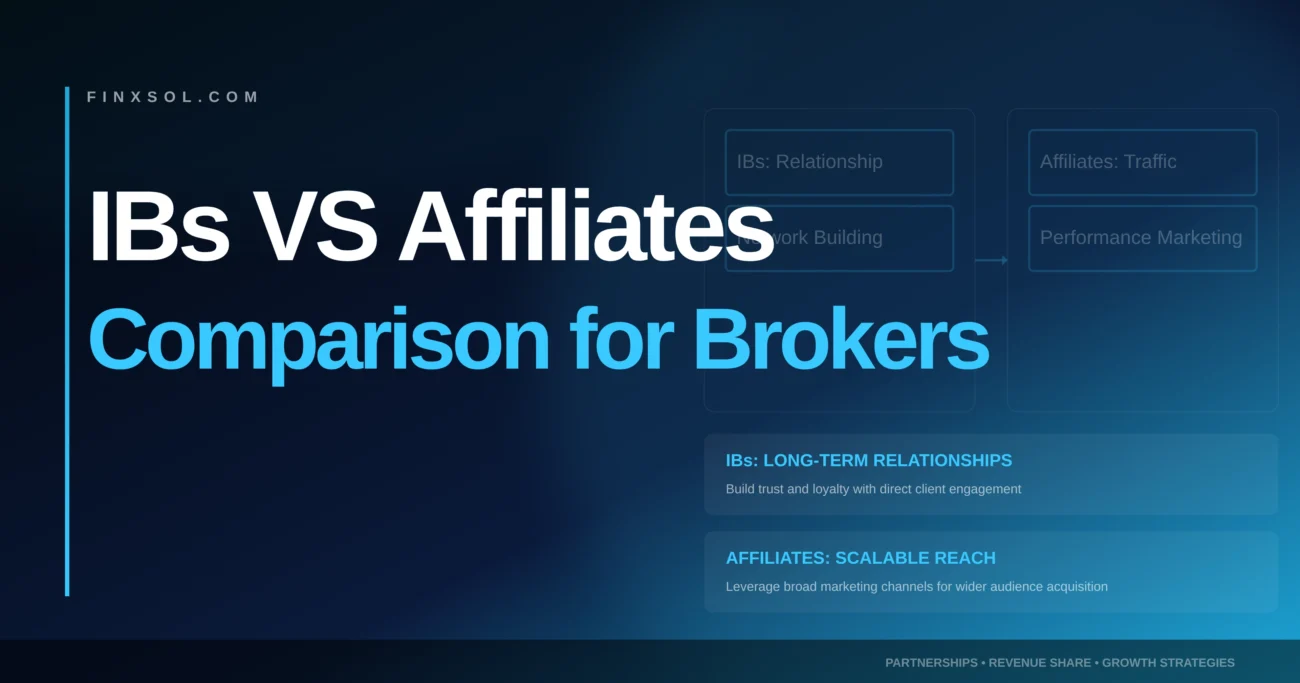
Choosing between an Introducing Broker and an Affiliate program depends on your business model, audience, and how you prefer to work. IBs build long term client relationships and earn recurring revenue share. Affiliates drive traffic at scale and earn one time CPA payouts. This guide explains the real differences to help you choose.
What is an Introducing Broker and What is an Affiliate?
Both IBs and affiliates refer clients to forex brokers and earn commissions. But the relationship with clients and the payment model are fundamentally different.
Introducing Broker: The Relationship Builder
An Introducing Broker acts as an intermediary between the broker and traders. IBs typically have existing networks of traders, run trading communities, or provide educational content. They build long term relationships with their referred clients by answering questions, providing support, and sometimes offering mentorship. IBs earn through a revenue share model, receiving a percentage of the spread or commission from every trade their referred clients make.
IB programs work well for traders with strong networks, community managers, coaches and mentors, finance entrepreneurs, and financial advisory firms.
Affiliate: The Digital Marketer
An affiliate is a digital marketer who drives traffic and converts leads through online channels like websites, YouTube, social media, email campaigns, or paid ads. Affiliates do not build personal relationships with referred clients. Their job ends when the client signs up and deposits. Affiliates earn through a CPA model, receiving a one time fixed payout up to $1,850 per qualified referred client.
Affiliate programs work well for digital marketing experts, media buyers, influencers, content creators, website owners, broker listing sites, and SEO specialists.
Key Differences Between Introducing Broker and Affiliate Programs
Payment Models: Revenue Share vs CPA Explained
The payment model is the biggest operational difference between IBs and affiliates.
Revenue Share in IB Model
Under the revenue share model, you earn a percentage of the spread or commission from every trade your referred clients make. This creates a recurring, long term income stream. Exness offers up to 40 percent revenue share to its top tier IBs.
- Commission up to 40 percent of spread from referred clients trades
- Payout timing instant or daily
- Works well for partners with long term client relationships
- Requires client retention and ongoing engagement
According to industry sources, introducing brokers typically earn between 30 to 50 percent of investor revenue. Larger intermediaries can negotiate higher percentages.
CPA in Affiliate Model
Under the CPA model, you earn a one time fixed payout for each qualified referred client who registers, deposits, and meets minimum trading requirements. Exness pays up to $1,850 per qualified trader depending on the client country and first time deposit amount.
- Commission one time fixed payout up to $1,850
- Payout timing daily after verification
- Works well for high volume traffic drivers
- Requires scale and conversion optimization
Other payment schemes in affiliate programs include Cost Per Lead for contact details and Cost Per Install for app downloads.
IB and Affiliate Responsibilities
Introducing Broker Responsibilities
IBs take a hands on approach to client acquisition and retention.
- Onboarding new clients by conducting KYC, verifying identities, understanding trading goals
- Managing trader accounts by handling complaints, inquiries, and periodic audits
- Educating and engaging clients through webinars, research groups, one on one coaching
- Building community through Telegram or Discord groups for ongoing support
Affiliate Responsibilities
Affiliates focus entirely on marketing and traffic generation.
- Creating content like blogs, videos, social media posts using advanced tracking plugins
- Running ad campaigns like PPC, social media ads, display networks
- Building audiences by growing followers across multiple channels
- Driving conversions by optimizing landing pages and calls to action
Which Model Should You Choose?
Neither model is objectively better. They serve different business strategies.
Choose the Introducing Broker Program If
- You already have a network of traders or a trading community
- You enjoy building relationships and providing mentorship
- You run educational content like webinars, coaching, courses
- You want recurring, long term passive income
- You are a financial advisor, insurance company, or fund manager
Industry data shows that 55 percent of registered IBs have been operating for 20 years or more, demonstrating the stability and long term potential of this model.
Choose the Affiliate Program If
- You excel at digital marketing like SEO, PPC, social media
- You have a website, YouTube channel, or large social following
- You prefer a hands off, transaction based approach
- You want immediate, high value payouts per conversion
- You are a content creator, influencer, or media buyer
The brokerage affiliate industry is projected to grow at 11.5 percent compound annual growth rate through 2032, reaching over $25 billion.
The Hybrid Approach
Some partners do both. They grow their reach as an affiliate while nurturing client relationships as an IB. Many brokers allow you to start as an affiliate and upgrade to an IB program as you build your client base.
For brokerages looking to set up their own IB and affiliate programs, advanced platforms offer CRM integration to manage multi tiered networks, automate partner payouts, and monitor performance from a centralized back office integrated with trading platforms.
Frequently Asked Questions About IB vs Affiliate Programs
What is the difference between an Introducing Broker and an affiliate?
An IB builds long term relationships with referred clients, provides ongoing support, and earns recurring revenue share. An affiliate drives traffic through digital marketing, has minimal client contact, and earns one time CPA payouts.
Which is more profitable, IB or affiliate?
Neither is strictly more profitable. The CPA model offers high immediate returns up to $1,850 per client. The revenue share model builds a cumulative, recurring income stream over time based on ongoing trading volume. Your earnings depend on your traffic type and business strategy.
Can I be both an IB and an affiliate?
Yes, many partners do both. Some brokers allow you to start as an affiliate and upgrade to an IB program as you build your client base. This gives you flexibility to test both models.
Do I need a license to become an Introducing Broker?
Requirements vary by jurisdiction. In some regions, IBs need to register with local regulators. Affiliates typically face fewer regulatory requirements since they do not handle client funds or provide financial advice. For licensing guidance, contact our team.
How do I get paid as an IB?
IBs receive commission based on their referred clients trading activity. Commissions are calculated on the opening spread of orders and fixed commissions depending on the trading account type. Payouts are typically processed daily or instantly through automated payout systems.
How do affiliates track their referrals?
Affiliates receive a unique tracking link. When someone clicks the link and signs up, the affiliate is credited. Most brokers provide a partner personal area dashboard with real time tracking of referrals, deposits, and earnings.
Ready to set up your IB or affiliate program?
Finxsol helps brokerages launch and manage IB and affiliate programs with advanced CRM integration, automated payout systems, and real time performance tracking. Contact our partnership specialists for a free consultation.