
What Is a Forex Payment Gateway for Brokers
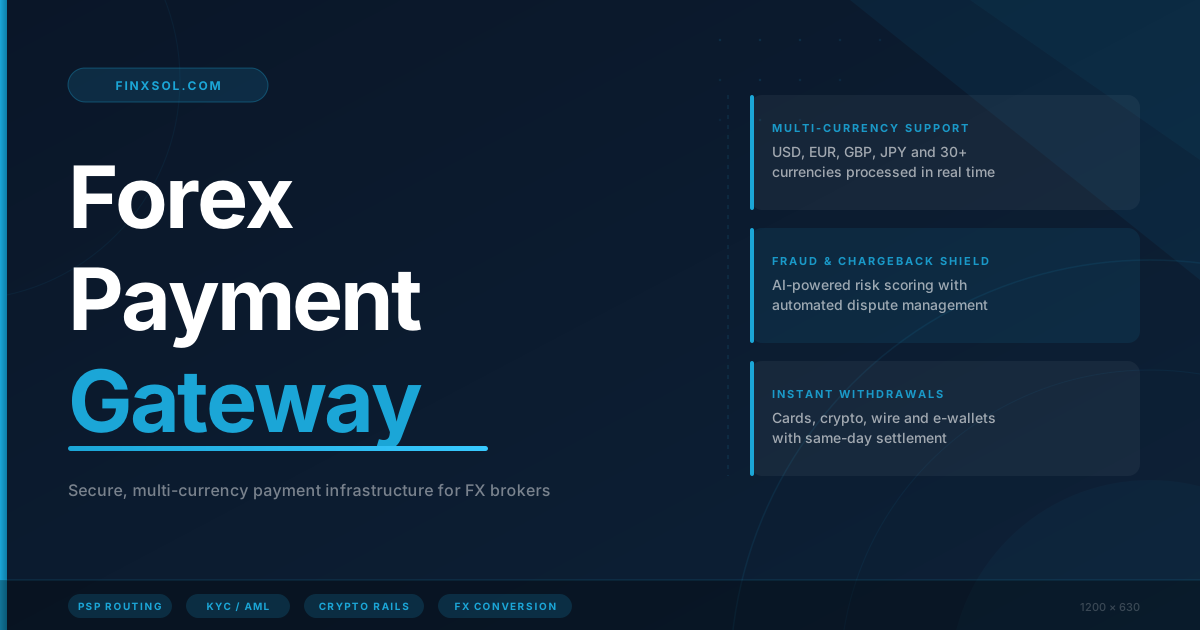
Executive Summary: A forex payment gateway is the infrastructure that connects your trading platform to payment systems. It handles forex deposits and withdrawals, verifies clients, and moves money between traders and broker accounts. Without a proper payment gateway for forex brokers, you cannot operate. This guide explains how forex payment processing works, why forex merchant account services matter, and how to choose a forex payment gateway provider that fits your brokerage.
What Is a Forex Payment Gateway? A Direct Answer
A forex payment gateway is a software system that allows traders to deposit money into their trading accounts and withdraw profits back to their bank accounts, cards, or e-wallets. It acts as the middle layer between your trading platform and the financial networks that move real money. For a complete overview of launching a brokerage, read our how to start your own forex brokerage guide.
When a trader clicks “deposit”, the forex payment gateway collects the request, verifies the transaction, checks KYC verification and anti-money laundering rules, then sends the funds to your forex merchant account. When they withdraw, the same system processes the request in reverse.
For brokers, a forex payment gateway for brokers is not optional. You cannot accept client money without one. The foreign exchange market runs on speed, and your forex payment infrastructure determines how fast traders can fund their accounts and take profits. Learn more about forex brokerage licenses and regulatory requirements before choosing a gateway.
Why Forex Payment Processing Is Different From Ecommerce
Standard online stores use regular payment processors. Forex payment processing is different. Banks classify currency trading as a high-risk industry. This means many normal payment companies will reject forex brokers outright. Check our forex broker regulations and licenses article to understand compliance expectations.
Here is what makes forex payment solutions unique:
- High transaction volume – Active traders deposit and withdraw multiple times per week
- Large ticket sizes – Professional traders move five or six figures regularly
- Global client base – You need multi-currency forex payments and local methods
- Chargeback risk – Losing traders sometimes dispute transactions
- Regulatory scrutiny – Forex compliance requirements are strict everywhere
This is why you need a high-risk payment gateway designed for forex broker payment solutions, not a standard ecommerce processor. Many brokers use white label forex broker solutions that include integrated payment gateways.
Core Features of a Forex Payment Gateway
Multi-Currency Support
A multi-currency payment gateway lets traders deposit in USD, EUR, GBP, JPY, or crypto. The system handles currency conversion payment gateway logic automatically. For trading platform options, see our trading platforms page.
Instant Deposits
Instant payment processing forex means traders see funds in their platform within seconds. Delays lose clients.
Fast Withdrawals
Automated deposits and withdrawals forex systems process payout requests within hours, not days. This builds trust.
Multiple Payment Methods
Your forex payment provider should support cards, bank transfers, e-wallets, and local methods for each region you serve.
PCI Compliant Security
A PCI compliant payment gateway encrypts all sensitive data. Secure forex payment processing is non-negotiable.
Fraud Prevention
Fraud detection forex payments systems use AI fraud detection payments to block suspicious activity before money moves. Read our forex CRM features guide to see how CRM integrates with payment security.
How Forex Brokers Handle Deposits and Withdrawals
Forex deposits and withdrawals follow a simple flow, but the technology behind it is complex. For brokers using MetaTrader, our MT5 MT4 PAMM solutions can integrate with your payment gateway.
Deposit process: Trader selects payment method and amount. The payment gateway for international forex brokers sends a request to the payment processor. Funds are taken from the trader’s bank or card. The forex transaction gateway credits the trader’s platform account. All this happens in real time.
Withdrawal process: Trader requests a withdrawal from their platform account. The broker’s system checks available balance and forex compliance requirements. The forex payment gateway services send funds back to the original payment method. Settlement takes hours or days depending on method.
Modern forex payment solutions automate this entire workflow. Your team should not touch individual transactions manually. Learn about liquidity solutions that work alongside your payment infrastructure.
Forex Payment Gateway vs Standard Payment Processor
Forex Merchant Account: What Brokers Need to Know
A forex merchant account is a special bank account that accepts client deposits. Normal merchant accounts will close forex brokers. You need a high-risk merchant account forex provider that understands the industry. For offshore options, see our offshore company formation services.
Forex merchant account approval requirements typically include:
- Valid brokerage license
- Corporate bank account
- Processing history (if any)
- Anti-fraud procedures documentation
- Website and trading platform details
Many brokers use forex merchant account services from specialized providers. These services combine the merchant account with the forex payment gateway into one package. Explore our forex broker turnkey solutions for fully managed setups.
Working with an established forex merchant services provider speeds up approval. Some providers approve accounts in 5-7 days. Others take months. Ask about timeline before signing. Check our offshore forex company formation guide for jurisdiction-specific advice.
How to Choose a Forex Payment Gateway: Step-by-Step
Check High-Risk Approval
Confirm the provider accepts forex payment gateway for high-risk businesses. Ask directly. Do not assume.
Review Fee Structure
Look for a forex payment gateway with low fees. Typical rates: 2-5% plus $0.20-0.50 per transaction. Watch for hidden setup or monthly fees.
Test Integration Speed
Payment gateway API integration forex should take days, not months. Ask about payment gateway APIs forex documentation quality. For custom integration, our plugins can help.
Verify Settlement Times
Ask how fast they settle to your bank. Worldwide payment processing forex should settle within 2-5 business days.
Confirm Method Coverage
Does the global payment gateway forex support your target regions? Test international forex payments for each country you serve.
Read the Contract
Look for rolling reserves (5-10% held for 6 months). Check termination fees. Understand chargeback protection forex policies. Contact our team for personalized advice.
Security and Compliance: Non-Negotiable Requirements
Secure forex payment processing is not optional. It protects your clients and your license. Review our CySEC forex license guide for regulated market requirements.
Forex payment security requires:
- PCI DSS Level 1 certification for the gateway
- Transaction monitoring forex systems running 24/7
- Fraud prevention forex payments with machine learning
- Chargeback protection forex workflows and dispute management
Regulatory compliance forex payments means your gateway must support:
- AML compliance forex payments – automated screening
- Anti-money laundering forex reporting to authorities
- KYC verification forex – document collection and validation
- Forex compliance requirements for each jurisdiction you operate in
A good forex payment gateway provider bakes all of this into the product. You should not build compliance tools yourself. Learn about forex brokerage fees explained to understand total operational costs including payment processing.
Global Payment Coverage: Multi-Currency and Cross-Border
Cross-border payments forex are the reality for most brokers. Your traders live everywhere. Your multi-currency payment gateway must handle that. For brokers targeting specific regions, our Comoros forex license and Moheli forex license pages offer jurisdiction options.
A proper global payment gateway forex supports:
- Multi-currency forex payments – USD, EUR, GBP, JPY, AUD, CAD, CHF, NZD, and more
- International forex payments – processing from 100+ countries
- Currency conversion payment gateway – transparent rates without hidden spreads
- Worldwide payment processing forex – local acquiring in major regions
Global forex payment solutions also include region-specific methods: iDEAL for Netherlands, Sofort for Germany, Pix for Brazil, UPI for India, Interac for Canada. If your gateway does not offer local methods, you will lose traders in those markets.
Technical Integration: APIs and Platform Compatibility
Payment gateway API integration forex connects your trading platform to the gateway. This is technical work, but it should be straightforward with good documentation. Our MetaTrader plugins can enhance your platform’s payment capabilities.
Look for payment gateway APIs forex that offer:
- REST API for deposits and withdrawals
- Webhook notifications for transaction status
- SDKs for popular programming languages
- Plugins for MT4, MT5, cTrader, or your platform
Scalable payment infrastructure matters. Your gateway should handle volume spikes during news events or marketing campaigns without crashing. Ask about their maximum transactions per second.
Settlement and reconciliation forex should be automated. Your gateway should provide daily reports that match your platform’s transaction records.
Risk Management and Fraud Prevention
Risk management payment systems are critical for forex brokers. You face three types of risk:
Chargeback risk – Traders who lose money may dispute deposits. A good gateway offers chargeback protection forex with automated dispute response and evidence collection.
Fraud risk – Stolen cards, synthetic identities, and money laundering. Fraud detection forex payments systems use rules and machine learning to block bad actors before they fund accounts.
Regulatory risk – Fines or license revocation for non-compliance. Transaction monitoring forex and AML compliance forex payments protect you.
AI fraud detection payments is becoming standard. The system learns from each transaction and adapts to new fraud patterns automatically. Ask your provider if they use machine learning or just static rules. Read our top liquidity providers guide to understand the full ecosystem.
Comparing Forex Payment Gateway Providers
A forex payment gateway comparison should focus on approval odds, not just price. Many brokers waste months applying to gateways that will never approve them. Visit our blog for more industry insights and provider reviews.
When you research best forex payment gateway options, ask these questions:
- Do you specifically approve forex brokers?
- What is your typical approval timeline?
- Do you hold funds in a rolling reserve? What percentage?
- Which countries do you block?
- What happens if my chargeback ratio exceeds 1%?
Many brokers end up using multiple forex payment gateway provider services. One for EU clients, another for Asia, a third for crypto deposits. This is normal. Your forex payment provider strategy can include several partners.
For a detailed forex payment gateway guide, speak to other broker owners. Their real-world experience matters more than marketing materials. Explore our partnership opportunities for broker support.
Frequently Asked Questions
What is a forex payment gateway for brokers exactly?
A forex payment gateway for brokers is software that connects your trading platform to payment networks. It processes forex deposits and withdrawals, verifies client identity, checks for fraud, and moves money between traders and your forex merchant account. Without it, you cannot accept client funds.
Why is forex considered high risk for payment processing?
Why forex is high risk comes down to three factors. First, chargebacks from losing traders. Second, global regulation makes forex compliance requirements complex. Third, the industry attracts fraud and money laundering attempts. Banks classify currency trading as high-risk, so you need a high-risk payment gateway.
How do I apply for a forex merchant account?
To apply for forex merchant account, find a provider that specifically serves forex brokers. Submit your license, corporate documents, processing estimates, and fraud prevention plan. Forex merchant account approval requirements vary by provider. Some approve in days. Others take months. Ask about timeline before you apply.
What is the difference between a payment gateway and a merchant account?
A forex payment gateway is software that routes transactions. A forex merchant account is the bank account that holds funds before settlement. Many forex payment gateway providers offer both as a package. You need both to operate.
How long do forex withdrawals take through a payment gateway?
Forex deposits and withdrawals timing depends on method. Instant payment processing forex works for deposits. Withdrawals take 1-5 business days typically. Card withdrawals are fastest. Bank transfers are slower. Your forex payment infrastructure should show expected timelines to traders before they request payouts.
Can I use a normal payment processor for my forex brokerage?
No. Standard processors like Stripe, Square, or PayPal prohibit forex brokers in their terms. They will freeze your account and hold funds if they discover forex trading payments. You need a specialized high-risk merchant account forex provider that understands the industry and accepts forex payment gateway for high-risk businesses.
Conclusion
A forex payment gateway for brokers is the foundation of your operation. Without reliable forex payment processing, traders will not trust you with their money. The right forex broker payment gateway handles deposits instantly, processes withdrawals quickly, manages forex compliance requirements, and protects against fraud and chargebacks.
Take time to research forex payment gateway providers. Ask hard questions about approval odds, fees, settlement times, and forex payment security. Do not rush. A bad gateway choice will lose clients and create operational headaches for years.
Your forex payment infrastructure should scale with your brokerage. As you add traders, new regions, and more payment methods, your gateway must handle the load. Choose a partner that grows with you. For more information, visit our payment gateways page or contact us directly.
If you are setting up a new brokerage or upgrading an existing one, prioritize your forex merchant account services from day one. Smooth payments equal happy traders. Happy traders stay longer and trade more. That is the business case for getting your forex payment solutions right.